Low-carb vegetables – the best and the worst
 , medical review by Dr. Michael Tamber, MD
 Evidence based
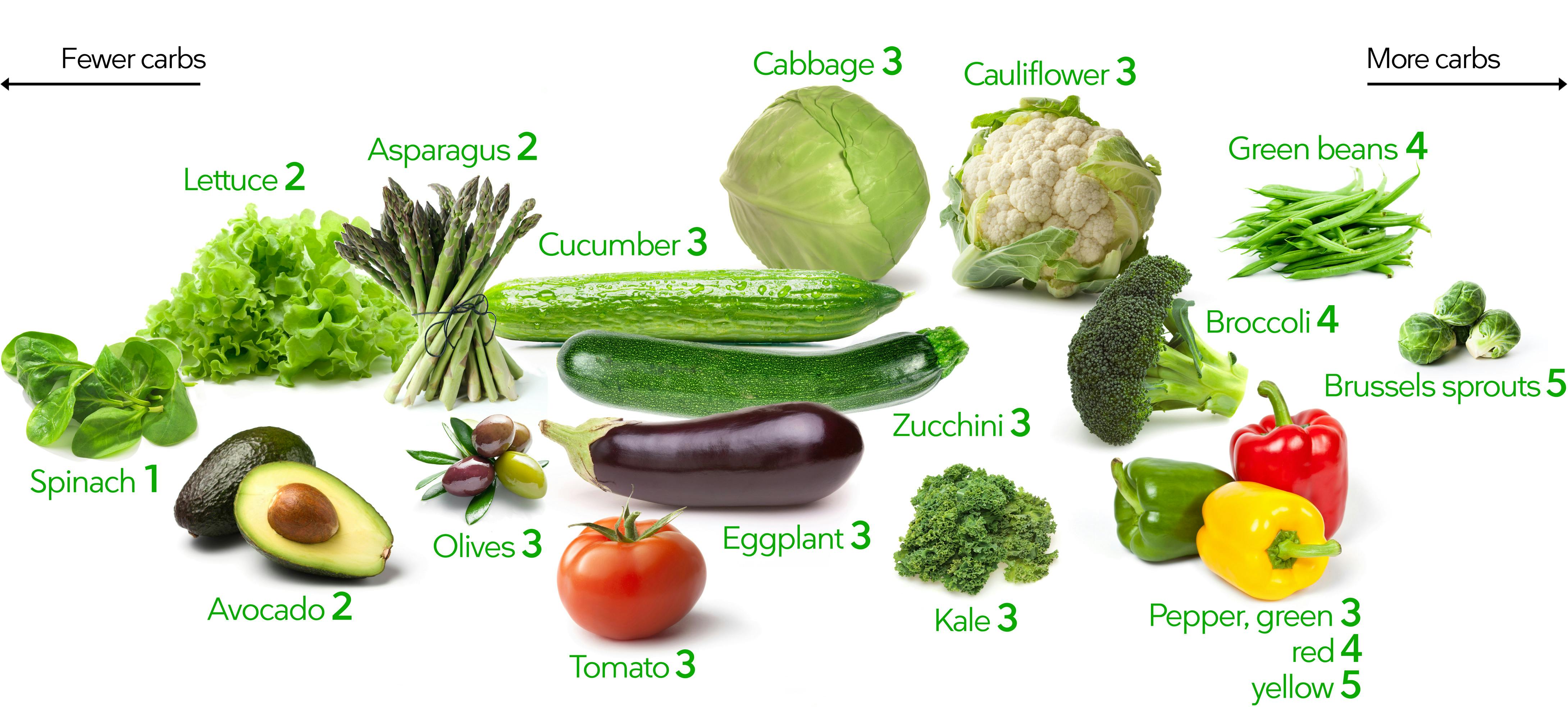
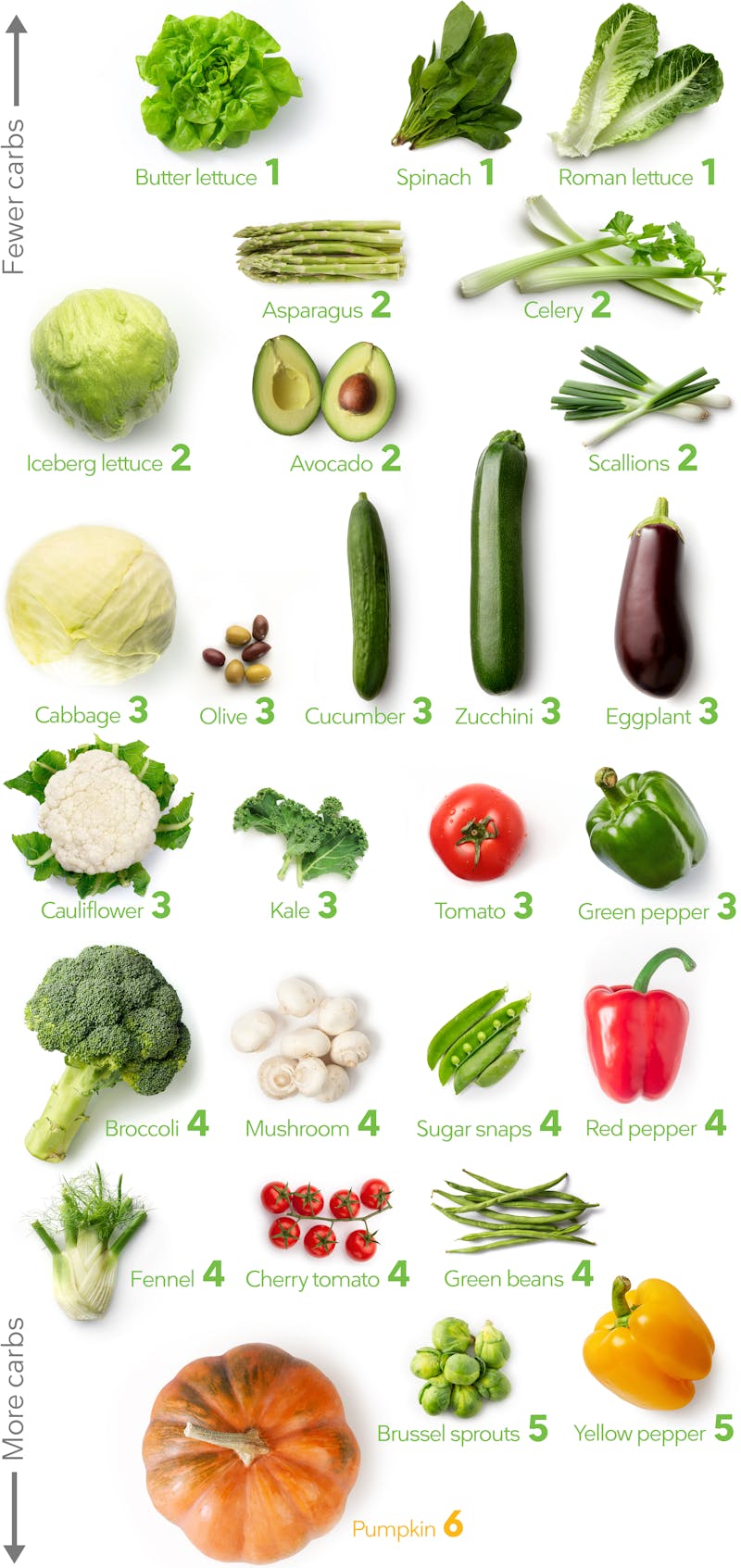
Which vegetables are low in carbs? The best low-carb vegetables are generally leafy greens and other vegetables that grow above ground, including spinach, lettuce, asparagus, cauliflower, zucchini, cabbage, cucumber, broccoli, and green beans.
Most of these vegetables contain fewer than 5 grams of net carbs per 100 grams (3½ ounces), making them suitable for both low-carb and ketogenic diets.
A simple rule can help you choose:
- Above-ground vegetables are generally lower in carbs and are usually the best choices for a low-carb diet.
- Below-ground vegetables, also known as root vegetables, generally contain more carbs. Potatoes, sweet potatoes, parsnips, and similar vegetables can quickly use up your daily carb allowance.
However, this rule has exceptions, and portion size matters. Tomatoes, onions, carrots, bell peppers, and Brussels sprouts can all fit into a low-carb diet, but you may need to limit the amount if you follow a strict keto diet.
Throughout this guide, carb counts are shown as net carbs, calculated by subtracting fiber from total carbohydrates. Unless otherwise stated, the values are given per 100 grams of uncooked vegetables.
Low-carb vegetables at a glance
- Lowest-carb choices: Spinach, lettuce, asparagus, avocado, cucumber, cauliflower, zucchini, cabbage, and kale.
- A useful guideline: Vegetables with fewer than 5 grams of net carbs per 100 grams generally fit well into a low-carb diet.
- Eat in moderate amounts: Bell peppers, Brussels sprouts, carrots, onions, rutabaga, and beets.
- Usually avoid on strict keto: Potatoes, sweet potatoes, parsnips, corn, and most beans and lentils.
- Strict keto: Many people aim to stay below 20 grams of net carbs per day.
- Moderate low carb: A daily intake of 20 to 50 grams of net carbs allows for a wider variety and larger portions of vegetables.
In this guide, you’ll find the net carb counts of common vegetables, our top 10 low-carb choices, vegetables to limit, and practical recipes for using them in everyday meals.
Above ground
All numbers are net carbs per 100 grams (3½ ounces).1
Below ground
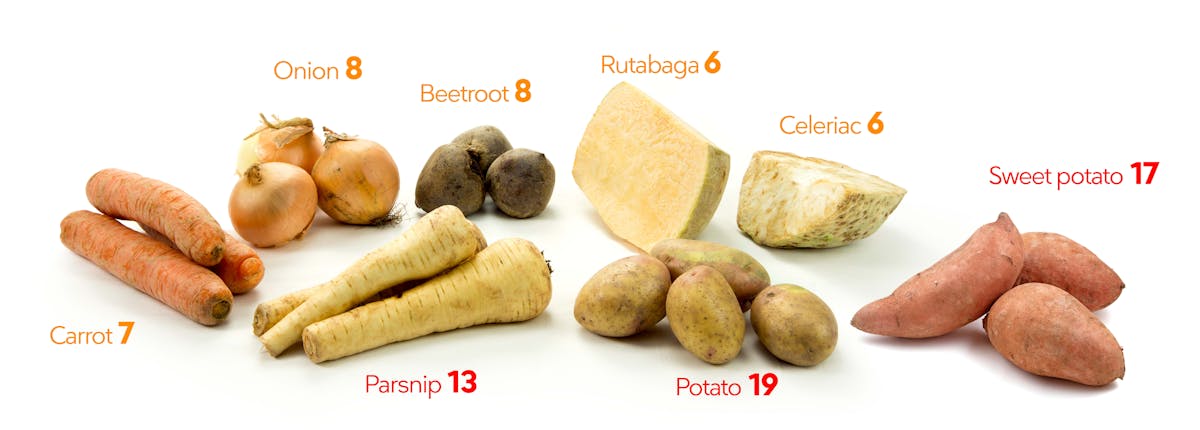
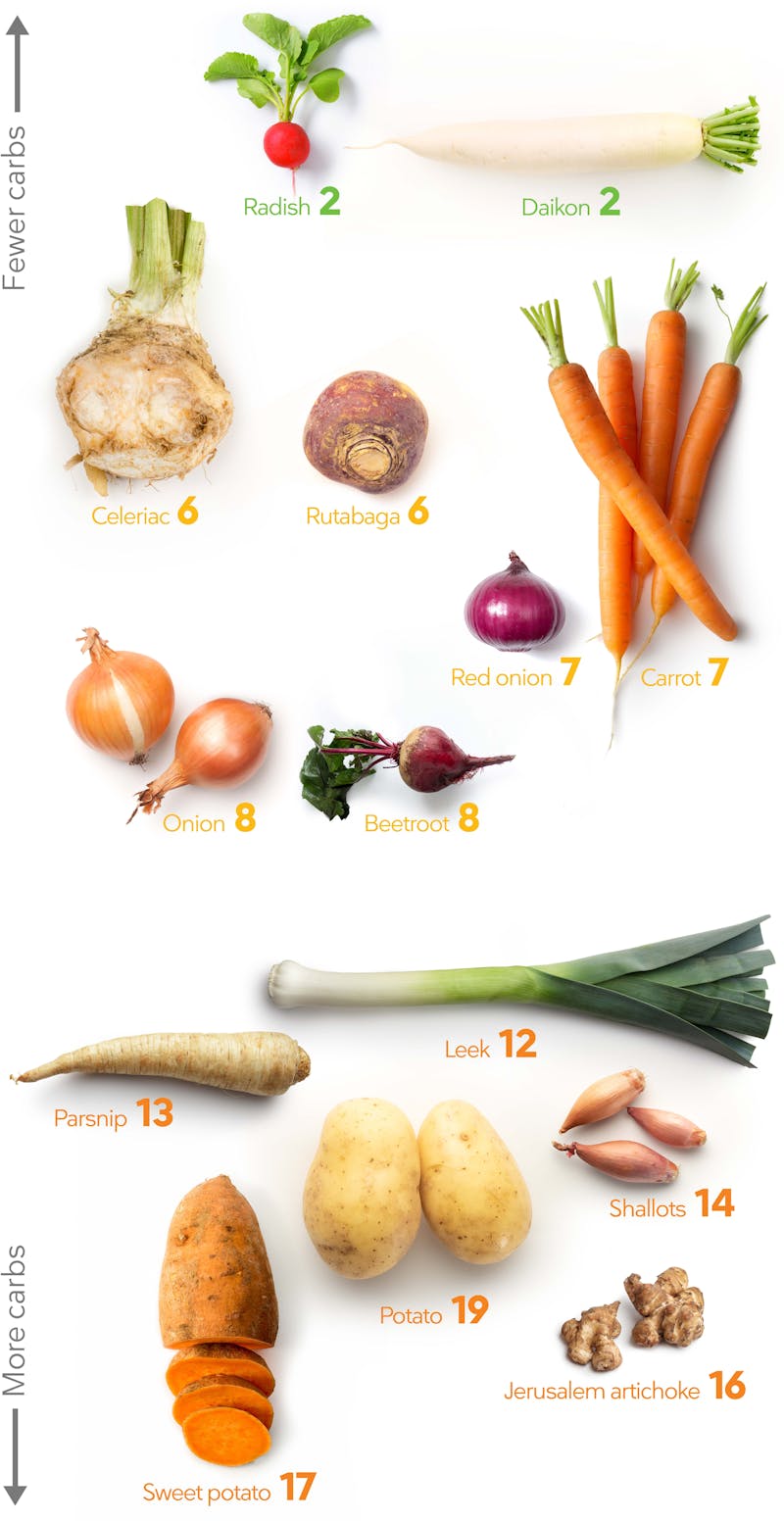
Please note the differences between above-ground and below-ground vegetables.
Vegetables with less than 5 grams of net carbs may be eaten relatively freely. If you’re on a moderate low-carb diet (20-50 grams of net carbs per day), you can probably eat all you want of all these low-carb vegetables.
If you’re on a keto low-carb diet (below 20 grams a day), you may need to be careful with some of the vegetables. You should probably be especially careful with bell peppers or tomatoes – these carbs can quickly exhaust the 20 grams per day limit. One medium-sized bell pepper may contain 4-7 grams of digestible carbs.
Top 10 low-carb vegetables

All numbers are net carbs per 100 grams (3½ ounces).3
- Cauliflower – 3 g. Perhaps the most classic and iconic of all low-carb vegetables. The base of cauliflower rice and cauliflower mash. Check out our top cauliflower recipes
- Cabbage – 3 g. Another great low-carb vegetable. Who doesn’t love butter-fried green cabbage or the simply amazing Asian cabbage stir-fry? For more, here are our top cabbage recipes
- Avocado – 2 g. Not just low carb, but also full of nutritious fat.4 Technically a fruit, but most people likely think of it as a vegetable. Avocado can be eaten in all kinds of ways, including on its own, in salads, or it can be used to make guacamole. But that’s just the start, here are other awesome avocado recipes
- Broccoli – 4 g. Another great option that can replace pasta, rice or potatoes. Just fry it in butter or add some cheese for great-tasting side dishes. More recipes
- Zucchini – 3 g. Try our zucchini fries or zucchini chips. Zucchini can also be used to make low-carb pasta, like in this low-carbonara. More recipes
- Spinach – 1 g. An extremely low-carb vegetable, spinach is full of vitamins and minerals and can be used many ways.5 It pairs beautifully with eggs, such as in our popular frittata. Check out that spinach recipe, and and many more
- Asparagus – 2 g. Revered as both a food and medicine – and aphrodisiac – by the ancient Egyptians, Greeks and Romans up to medieval times, asparagus is one of the world’s oldest cultivated vegetables.6 Nutritious and delicious!7 Try it wrapped with prosciutto and grilled, or in other tasty recipes
- Kale – 3 g. Hardier than spinach, less watery, but just as nutrient-rich, kale can stand up to mincing, sautéing, baking, and much more.8 Cut into ribbons, it makes a great noodle substitute for zesty sauces. Recipes
- Green beans – 4 g. Frenched, diced and tossed in a salad, fricasseed and more, green beans taste great especially with added fats like butter, an olive-oil vinaigrette, or bacon. Recipes
- Brussels sprouts – 5 g. Nutty, filling and nutritious, they are especially good roasted with olive oil and garlic, or with bacon.9 Or steam and serve with a cheese cream sauce. Recipes
Vegetable sticks and dip
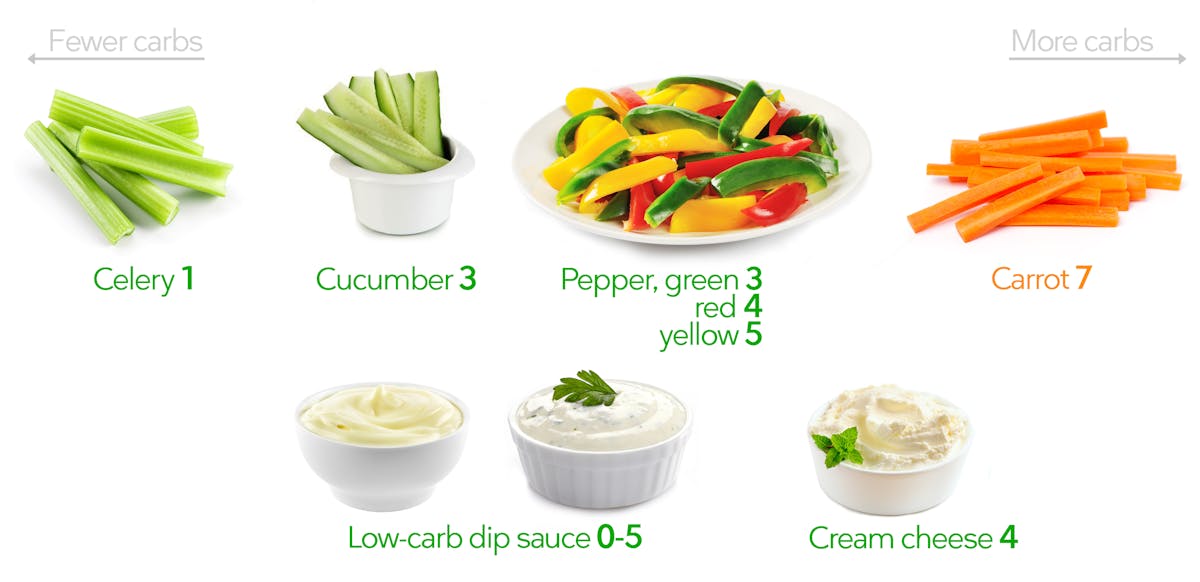
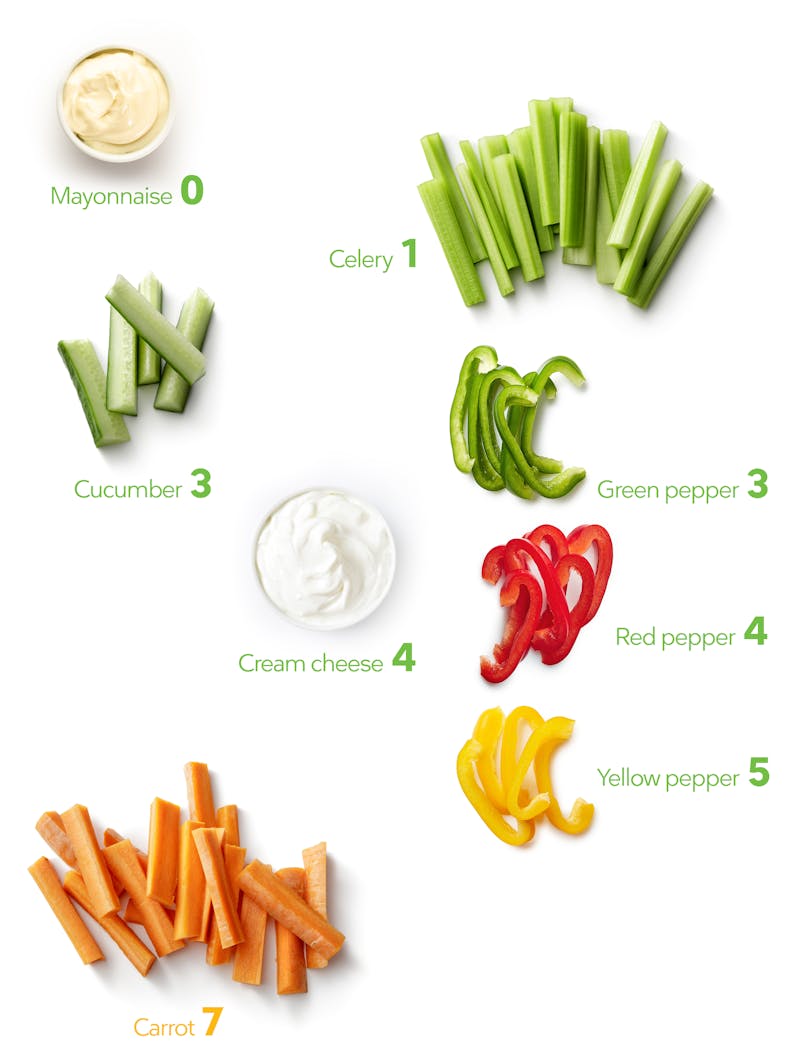
Vegetable sticks are relatively low carb, except for carrots which have slightly more carbs.
Dip: Add cream cheese or any really low-carb and high-fat dip sauce. Here are our top recipes:


Peas, corn, beans, etc.
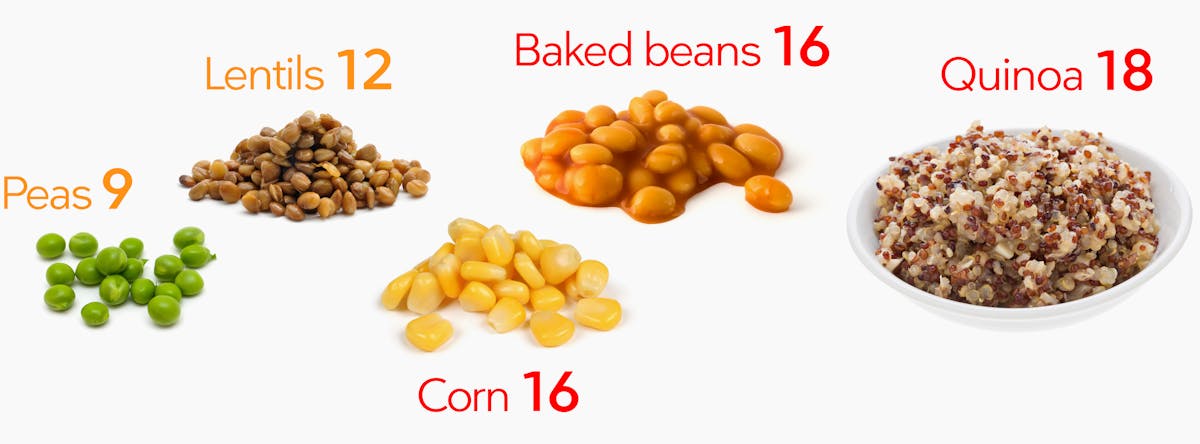
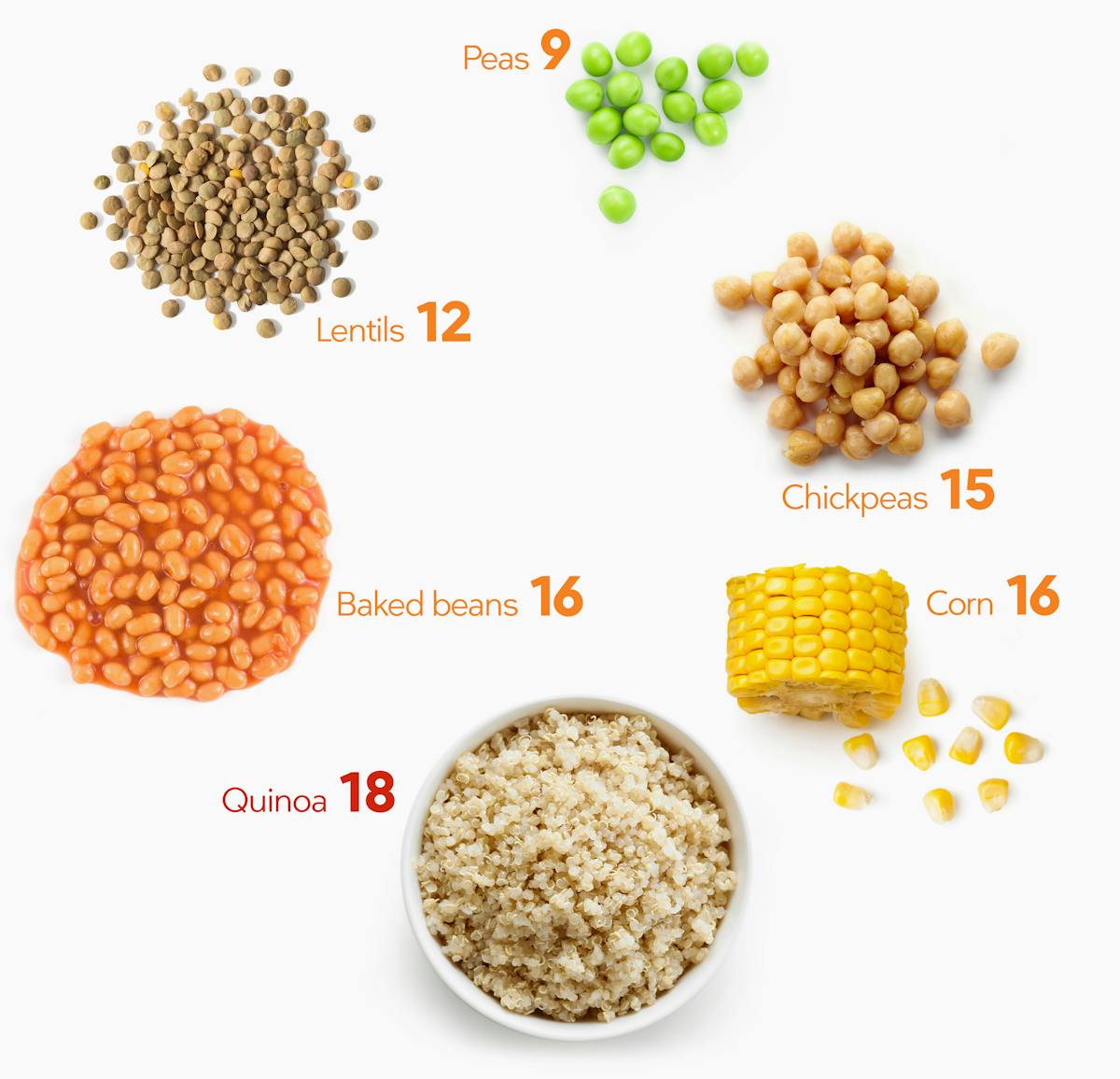
Peas, corn, beans, lentils and quinoa are relatively high in carbs, and so are not good options on a keto low-carb diet. On a more moderate or liberal low-carb diet, you may be able to include some peas and lentils.
Side note: grains like corn and quinoa are usually not considered vegetables.10
Low-carb vegetable recipes
Top cauliflower recipes
Cauliflower may be the most popular low-carb vegetable of all. Here are our top cauliflower recipes:





Top cabbage recipes
Cabbage is another very versatile low-carb vegetable. Here are our top cabbage recipes:


Food for thought

Q&A
Here are a few common questions about low-carb vegetables. For all kinds of questions, have a look at our full low-carb FAQ.
Can you eat tomatoes on a low-carb diet?
Yes. Tomatoes contain about 3 grams of net carbs per 100 grams (about 5 grams per cup). But if you’re eating a strict keto low-carb diet (below 20 grams per day) it’s worth keeping in mind that the carbs do add up, and you can only eat a moderate amount of tomatoes to stay under that limit.11Are cucumbers low in carbs?
Cucumbers have about 3 grams of net carbs per 100 grams, so they are fairly low carb – as you can see in the visual guide above. You can absolutely eat cucumber on a low-carb diet.Are carrots OK on low carb?
Carrots contain about 7 grams of net carbs per 100 grams. On a keto low-carb diet (below 20 grams per day) you may want to avoid carrots completely. But they can be OK on a moderate or liberal low-carb diet (if you’re aiming to stay below 50 or 100 grams of carbs per day).
Visual low-carb guides

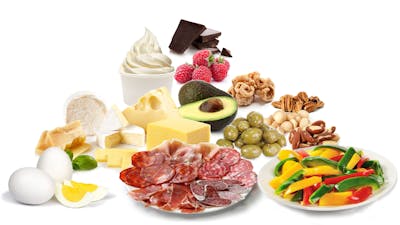

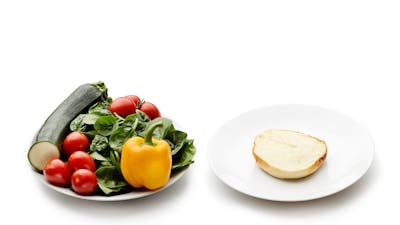
More


Low-carb vegetables – the best and the worst - the evidence
This guide is written by Dr. Andreas Eenfeldt, MD and was last updated on July 27, 2026. It was medically reviewed by Dr. Michael Tamber, MD on December 9, 2021.
The guide contains scientific references. You can find these in the notes throughout the text, and click the links to read the peer-reviewed scientific papers. When appropriate we include a grading of the strength of the evidence, with a link to our policy on this. Our evidence-based guides are updated at least once per year to reflect and reference the latest science on the topic.
All our evidence-based health guides are written or reviewed by medical doctors who are experts on the topic. To stay unbiased we show no ads, sell no physical products, and take no money from the industry. We're fully funded by the people, via an optional membership. Most information at Diet Doctor is free forever.
Read more about our policies and work with evidence-based guides, nutritional controversies, our editorial team, and our medical review board.
Should you find any inaccuracy in this guide, please email andreas@dietdoctor.com.
Net carbs = digestible carbs, i.e. total carbs minus fiber.
The numbers are for uncooked vegetables. The carb content per 100 grams is generally slightly lower in cooked form.
For example, while raw broccoli has about 4 grams of net carbs per 100 grams, cooked broccoli has about 3 grams. The main reason for this difference is the increased water content of cooked vegetables.
The numbers are taken from online databases, like the USDA database. Note that there are minor differences among different databases. One reason could be that different breeds of the same vegetable can differ in carb content, while another reason is that there can be seasonal variation. In cases where there are significant differences among databases, we have attempted to choose a median value. ↩
Net carbs = digestible carbs, i.e. total carbs minus fiber. ↩
Net carbs = digestible carbs, i.e. total carbs minus fiber. ↩
They are the seeds of grasses:
Cherry tomatoes have an even higher amount of carbs with 5 grams of carbs per 100g. ↩